Open Letter to President Barrow
Your Excellency President Barrow
I write this letter to you with trepidation and anxiety, as a concerned citizen in our nascent democracy, which you fondly call New Gambia. With utmost respect, Mr. President, let me remind you that the Presidency is an institution and all your powers are derived from the sovereign citizens of the Gambia as clearly stated in section 1 (2) of the 1997 Constitution which reads:
“ The Sovereignty of The Gambia resides in the people of The Gambia from whom all organs of the government derive their authority and in whose name and for whose welfare and prosperity the powers of the government are to be exercised in accordance with this Constitution ”
Mr. President, let me take this opportunity to remind you that all the powers you exercise are subject to limits set by the supreme law of The Gambia, our Constitution as stated in section 61 (2)
“ The President shall uphold and defend this Constitution as the supreme law of the Gambia”
Mr. President, We as citizens as the repository of the sovereign powers of the state, have delegated our powers to your office to execute your duties in accordance with the laws of the land. Mr. President, you are the custodian or trustee of powers that belongs to the people, a powers bestowed to you by the people and powers to execute in the interest of the people. In a nutshell, all your powers and legitimacy are derived from the citizenry.
The good citizens of The Gambia broke the shackles of a brutal dictatorship and are still healing from a very dark episode of that history. The freedoms we enjoy today were not handed to us on a platter but are rather the result of sacrifices of patriotic Gambians - some of whom paid the ultimate price, may their lives rest in peace.
Mr. President I find it hard to believe that you allegedly made the statement that “The Gambian people were scared of Yahya Jammeh’s power because he had the police, the SIS, the Army, but I am more powerful because I have the Police, the SIS, the Army and ECOMIG forces”[ my emphasis].
Mr. President, with utmost respect, the Police is our police, the SIS is our SIS and the ECOMIG is our ECOMIG. Mr. President, as Commander in Chief, your duty is to uphold the Constitution and command the security forces in accordance with the dictates of the Law as provided in section 61 (1) & (2) of the Constitution.
Mr. President, Never again will our security apparatus be used at the whim of any leader against the citizenry or any person for that matter. Mr. President all security forces are servants of the sovereign people of the country albeit under your command at our behest. We trust and expect that the era of Presidential directives to our security forces is a thing of the past.
Mr. President, our country is at a crossroad. As we are trying to build the foundation of our democracy (Constitutional Review Commission ”CRC”) and seeking to heal as a nation (Truth, Reconciliation and Reparation Commission “ TRRC” ), the youths are anxious and impatient, and want to reap the democratic dividends now.
Mr. President, the same security forces you mentioned as belonging to you, belonged to your predecessor and were used as instruments of oppression against the citizenry. Mr. President, rest assured that the fear factor is a thing of the past. We defiantly stood up against your predecessor at the height of the political impasse despite his army, NIA (now SIS) and Police. #GambiaHasDecided against tyranny or any form of Dictatorship.
Mr. President, with such a statement, what message are you sending to the CRC and the TRRC? Our nascent democracy is still fragile; the citizenry is learning the new ways of living under a democracy with all their expectations and aspirations.
Now, more than ever, as our leader, as captain of our ship, we are yearning for unity and peace. We are yearning for a “ New Gambia ” where the basic essentials such as water, quality education, health care and decent employment opportunities are available to Gambians, particularly the poor and the underserved. We are yearning for transformational leadership and not politics of rhetoric or division. Mr. President, we respectfully remind you of your own slogan one people, one nation and one destiny.
Mr. President, I hope and trust that you will recalibrate and refocus on making Gambia great. Mr. President, humility is a great trait and will endear you to Gambians. I humbly ask for the old President Adama Barrow to come back and steer our country to greatness.
For the Gambia our Homeland
Salieu Taal
Initiator #GambiaHasDecided
Concerned Citizen
Wednesday, 5 December 2018

Monday, 3 December 2018
WHAT IS IN A NUMBER? WHO PAYS FOR THE INTRODUCTION OF A NEW NUMBER PLAN
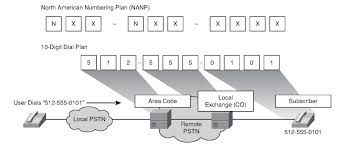
In telecommunications, a lot rides in a number. A numbering
plan is a telecommunication scheme through which telephone numbers are assigned
to subscribers and telephony endpoints. Each telephone number is an address
assigned to an endpoint in a network through which a designated subscriber can
be reached. Depending on the local telephony requirements and network, a numbering
plan can follow a number of strategies. Generally, operators are differentiated
by a prefix (the digit their number range starts with. Well this is rapidly
changing due to the introduction of number portability. Number portability
implies that a subscriber of telephony services can move from one network to
another by maintaining a unique number. This clearly is a break through in
telecommunication as numbers are a national resource that needs to be
efficiently and effectively managed.
In the case of Gambia, our number plan is not only poorly
managed by the regulator but it is frivolously allocated without due concern to
future needs of this scare resource. As at today, our number plan has 9 ranges
1-9 and each series has a possible combination of One Million numbers thereby giving
our telecommunications sector 9 million numbers. Generally, the 1 series is
reserved for public service etc. 2 and 7 are allocated to Africell, 3 and parts
of the 5 series are allocated to Qcell, 6 is allocated to Comium, 9 is
allocated to Gamcel whilst 4,8,5 are allocated for the various services offered
by Gamtel.
There are talks to introduce a new number plan. This has
adverse effects to destination Gambia as it will take time for callers reaching
the destination to be aware of the changes on the additional digit(s) added on
our existing numbers. In addition, there is a financial cost associated with
migrating the number plan. The cost of such a migration will ultimately be
passed on to the subscribers by the operators. Now the million-dollar question
is Should Gambia Migrate to a NEW Number
Plan? The answer is an emphatic no because the Gambia is yet to exhaust the
9 million potential numbers within our existing plan. The 4 and 5 series are
used by Gamtel for their land lines and it’s a known fact that nationally
Gamtel doesn’t have more than 75,000 lines and this figure is even on the high
side. This implies that within the 4 and 5 series we have a surplus of
1,925,000 possible numbers to use. It is also noteworthy to mention that the 8 series
is used for the CDMA (Jamano) service and no more that 40,000 clients subscribe
to that service nationally. That leaves us with a surplus of 960,000 numbers not
in use. This therefore implies that there is an inefficient use of our scare
resource (number range).
I therefore called on our regulator PURA to look into the
rationalization and effective use of our scarce resource rather than adding
additional cost to an already over burden subscribers who pay one of the highest
tariffs in the region for data. PURA must concentrate on making the sector more
innovative by rewarding investments into the sector. The Quality of Service (QOS)
Model to be adopted by PURA must reward innovation and investments. It baffles
me that a 2.5G Network (Comium) is still allowed to sell data to Gambian
subscribers. This is not only appaling but must be halted. Alternatively, Comium
must be charged a hefty SPECTRUM FEE to discourage the use of such technology.
In a nutshell, PURA is aiding COMIUM to milk their dilapidated infrastructure
that is not in line with the technological advances Gambian subcribers deserve.
An investor in the Gambian Telecommunication sector must avail the Regulator
(PURA) with a 5 year roll out plan per their capital expenditure to make their
networks efficient and responsive to the needs of the subscribers.
Friday, 30 November 2018
The Gambia Telecommunications Architecture needs a rethink! Innovate or Pay. The case of Comium a 2.5G Operator

Well time has elapsed and not much has changed in the telecommunication landscape of the Gambia both in terms of regulation and the desired outcomes expected by the frustrated subscribers of telephony services in the Gambia. At the heart of the maligned policy environment is the absence of a market driven regulatory environment whereby the regulator understands that regulation is all about equity by creating a state of Pareto Optimality where every one is made better off without making anyone worse of. This is logically possible if the regulator and the policy formulators understand that innovation is the driver of prosperity in the tech sector. The desire for innovation must be rewarded at all times. Having said that, I expect the regulator and the government to revisit the license regime governing operators in the Gambia by giving them a fiscal incentive for augmenting their capital investments in the market. Equally companies ought to be punished for delivering sub par services ( poor voice quality, permanent half bit rate voice across the network, poor and inadequate network topology) etc. It baffles me that the Government of the Gambia is still renewing the license of a 2.5 G operator to continue to sell data products in the local market. This is not only a regulatory anomaly but an affront to the subscribers of telephony services of our beloved nation. The time has come for the regulator to to recommend the revision of any operator selling data on a 2.5G to either upgrade or strictly operate as a voice operator. Case in point #ComiumGambiaLimited whose technology is below the wants and need of the average subscriber considering the fact that Data is King. Our national appetite for data capacity has exponentially grown over the years and the policy direction must encourage the investment of capital items in the sector by operators to address the frenzy of mobile data in the market
My prayer to the regulator and the policy formulates is to be more responsive to the needs of the Gambian subscribers by rewarding innovation and punishing the lack of technological advancements by our operators. A 2.5G network has no place in 2018 Gambia where our wants and needs per telecommunication is data driven. Companies have a right to live and the right to die and the choices they make in the course of doing business determines the trajectory they take.
Let's start 2019 with a responsive telco sector that will further open up the country than encourage operators to further milk a depreciated asset at the expense of society. Let them innovate or pay. This concept implies that we reward positive technological efforts or down grade a license at a cost by allowing 2.5G networks to strictly offer voice products.
Wednesday, 26 September 2018
Tuesday, 25 September 2018
Thursday, 13 September 2018
Subscribe to:
Posts (Atom)